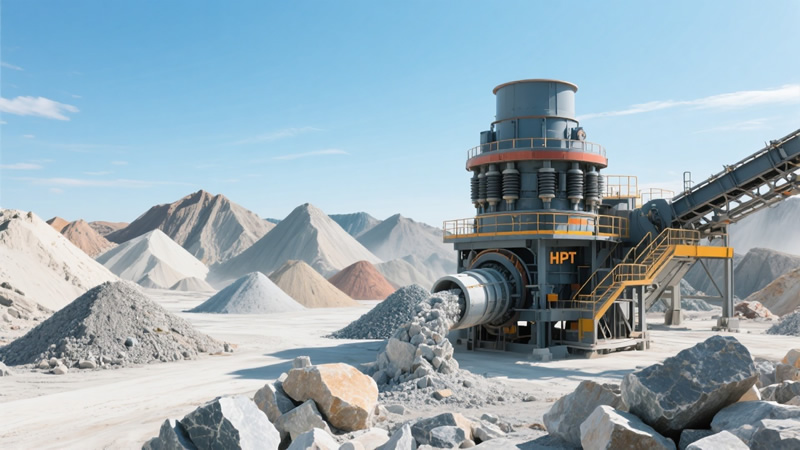
The quarrying industry is an indispensable primary sector that extracts natural stone, rock, sand, gravel, and aggregates from open-pit quarries and surface mines. It has underpinned human civilization since ancient times, supplying essential raw materials for construction, infrastructure, manufacturing, and urban development. Today, this sector remains a hidden engine of economic growth, supporting roads, bridges, buildings, railways, airports, and decorative architecture worldwide.
Core Products and Operational Process
Quarrying primarily produces two categories of materials: dimension stone and crushed aggregates. Dimension stone includes granite, marble, limestone, sandstone, and slate, which are cut into blocks, slabs, and tiles for high-end construction, landscaping, and sculpture. Crushed stone, sand, and gravel serve as the fundamental aggregates for concrete, asphalt, and road base materials.
Modern quarry operations follow a standardized, mechanized workflow: site survey and planning, overburden removal to expose ore bodies, drilling and precision blasting (or diamond-wire cutting for dimension stone), primary crushing, secondary processing, screening, sorting, and transportation. Advanced equipment such as automated drill rigs, GPS-guided loaders, diamond wire saws, and intelligent crushing plants has greatly improved efficiency, safety, and resource utilization.
Economic and Social Significance
As a cornerstone of the construction and infrastructure sectors, the quarrying industry drives regional development, creates jobs, and stabilizes supply chains for large-scale projects. It directly supports real estate, transportation, water conservancy, and energy facilities. In many economies, it contributes significantly to GDP, tax revenue, and local employment, especially in resource-rich regions.
Global demand for quarry products continues to rise with urbanization, infrastructure investment, and industrial upgrading. Market research indicates steady growth in the global stone mining and quarrying market, fueled by emerging economies’ large-scale construction and developed economies’ renovation needs.
Challenges: Environment, Safety, and Sustainability
Despite its vital role, the quarrying industry faces persistent challenges. Traditional operations may cause land disturbance, vegetation loss, dust, noise, and water runoff if not properly managed. Safety risks related to blasting, heavy machinery, and slope stability also require strict control. In recent years, governments worldwide have tightened environmental regulations, mine permitting, and reclamation requirements, pushing the industry toward cleaner and safer practices.
Green Transition and Intelligent Upgrading
The future of quarrying lies in sustainability and digitalization. Leading operators are adopting eco-friendly measures: land reclamation and ecological restoration after mining, water recycling, dust suppression systems, noise control, and waste stone utilization to minimize environmental impact. Many closed quarries are transformed into parks, wetlands, or ecological reserves, realizing circular land use.
Meanwhile, intelligent technologies are reshaping the sector. Drone surveying, real-time monitoring, automated production lines, and digital management platforms enhance operational transparency, reduce labor intensity, and lower safety risks. Energy-saving and low-carbon equipment helps the industry move toward carbon neutrality goals.
Conclusion
The quarrying industry is far more than a traditional extractive sector; it is a modern, technology-driven, and sustainability-oriented industry that builds the physical world we live in. Balancing resource development with environmental protection, and economic benefits with social responsibility, is the key to its long-term vitality. With continuous innovation in green practices and intelligent systems, the quarrying industry will keep providing reliable raw materials for global infrastructure and urban progress while moving toward a low-carbon, circular, and sustainable future.